

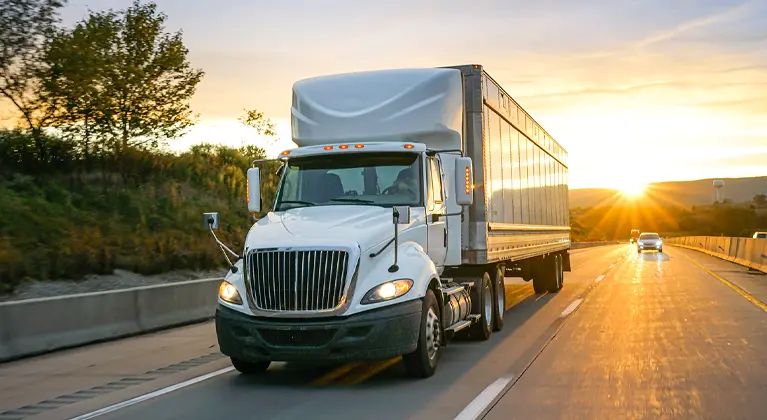
A collision involving a commercial truck is not handled the same way as a typical car accident case. At Born & McCaffrey Injury Law, we know these cases often involve multiple potentially liable parties, extensive insurance coverage, and federal trucking regulations that do not apply to most passenger vehicle crashes.
Determining what happened means examining corporate records and electronic data that may disappear if it is not preserved promptly. We move quickly to identify and protect that evidence while it still exists.
If you or a family member in Denver has been injured in a truck accident, call (303) 800-6996 for a free case review.
Why Work With Born & McCaffrey Injury Law?
Truck accident claims demand more than a basic investigation. They require prompt action, careful review of federal trucking regulations, and evidence strong enough to hold up against a carrier’s own investigators. At Born & McCaffrey Injury Law, you work directly with the attorney handling your case, because no two truck accident cases or clients are exactly alike.
A Client-First Approach
Your case is never treated like a file number. We take the time to understand how the collision has affected your life, answer your questions, and build the claim around what the evidence actually shows. You will work directly with your attorney, giving you consistent communication and guidance from start to finish.
Trial Lawyers Ready for Serious Cases
Commercial trucking companies and their insurers frequently defend these claims aggressively. Having attorneys with courtroom experience can make a meaningful difference when negotiations do not lead to a fair resolution.
Michael Born, Colorado Bar No. 38464, has spent his entire legal career representing injured people, in jurisdictions across Colorado and beyond, and Peter McCaffrey, Colorado Bar No. 46740, brings a trial-focused approach to serious injury cases.
From preserving black box data to presenting complicated evidence at trial, we prepare every truck accident case with the expectation that it may require litigation.
Serving Spanish-Speaking Clients in Denver
Clear communication is an important part of every attorney-client relationship. Peter McCaffrey speaks fluent Spanish, previously taught English in Spain, and hosts a weekly Spanish-language radio program. His ability to communicate directly with Spanish-speaking clients helps many families better understand the legal process without unnecessary language barriers.
If you were injured in a Denver commercial truck accident, speak directly with our attorneys at Born & McCaffrey Injury Law. Schedule a free case review today and learn how we can begin protecting the evidence and building your claim.
Why Evidence Disappears Fast in Truck Accident Cases
Trucking companies are required to keep certain records only for limited periods, and some companies send their own investigators to the crash scene within hours. That combination means the clock on your case starts running before you have even seen a doctor. Waiting even a few weeks to get legal help can mean losing evidence you never get back.
The truck’s black box, formally called an electronic control module, records speed, braking, and engine data in the moments before impact. Driver logs, now mostly kept through electronic logging devices, show if the driver had been on the road longer than federal rules allow. Dash cam footage, when it exists, can show what actually happened rather than what the driver reported afterward.
We send a spoliation letter to the trucking company, which is a formal written demand that they preserve specific evidence and not delete, overwrite, or discard it. Preservation obligations do not always kick in on their own, and a letter puts the company on notice in writing. Sending that letter quickly, often within days of the crash, is one of the most concrete steps a Denver truck accident lawyer can take on your behalf.
Colorado gives most truck crash claims three years to file under C.R.S. 13-80-101, longer than the two-year deadline that covers most other injury cases. That is not as much time as it sounds, because the records that decide these cases are gone long before the deadline arrives. Call us at (303) 800-6996 and we can start the preservation letter this week.
Who Can Be Held Liable After a Denver Truck Accident?
Liability after a Denver truck accident may include the truck driver, the trucking company, a cargo loading company, or a maintenance provider. Identifying all responsible parties is one of the first steps in building a truck accident claim, because the cause of the collision often extends beyond the driver’s actions alone.
Possible liable parties in a Denver truck accident case include:
The Truck Driver
Every commercial driver has a responsibility to operate their vehicle safely and comply with both Colorado traffic laws and applicable federal regulations.
A truck driver may be responsible for a collision involving:
- Distracted driving
- Fatigue
- Speeding
- Unsafe lane changes
- Following too closely
- Driving under the influence
- Failure to adjust for weather or road conditions
Driver negligence is one part of the investigation, but it is not always the entire story.
The Trucking Company
Many commercial drivers operate as employees of a trucking company. When that is the case, the company may also be legally responsible for the driver’s actions under legal principles that may hold employers accountable for conduct occurring within the scope of employment.
In addition to potential responsibility for the driver’s conduct, a trucking company may face separate claims involving:
- Inadequate hiring practices
- Poor driver training
- Failure to supervise drivers
- Unrealistic delivery schedules
- Failure to maintain vehicles
- Violations of federal safety regulations
Company policies, dispatch records, safety audits, and internal communications may all become important evidence during the investigation.
Independent Contractor Issues
Not every commercial driver is classified as an employee. Some operate as independent contractors, creating additional questions about who controlled the work being performed and which businesses may bear legal responsibility.
Although employment classification can affect certain legal issues, it does not automatically prevent a trucking company or another business from being named in a claim. The contracts between the parties, operational control, and the facts surrounding the trip all require careful review.
Other Businesses May Share Responsibility
Truck accident investigations may identify additional parties whose actions contributed to the collision. Depending on the circumstances, liability may also involve:
- Cargo loading companies that improperly secured freight.
- Maintenance contractors responsible for vehicle inspections or repairs.
- Companies responsible for trailer ownership or maintenance.
A complete investigation examines each potential source of responsibility rather than assuming the driver is the only party involved.
Because commercial trucking operations involve multiple companies working together, identifying every potentially liable party can significantly affect how a claim is investigated and resolved. Call Born & McCaffrey Injury Law to begin investigating the evidence and identifying the parties involved.
What Federal Regulations Apply to Colorado Truck Accidents?
Commercial truck drivers and trucking companies are under obligation to adhere to federal safety regulations that do not apply to most passenger vehicle drivers. The FMCSA regulations establish standards for driver qualifications, hours of service, vehicle inspections, maintenance, cargo securement, and other aspects of commercial trucking. When a violation contributes to a crash, it can become important evidence in determining liability.
Unlike a typical car accident claim in Denver, a truck accident investigation frequently involves reviewing whether the trucking company and driver followed these federal requirements before the collision occurred. The key rules governing truck operations in Denver include the following:
Hours-of-Service Rules
Driver fatigue is a recognized risk in the trucking industry, which is why the FMCSA limits how long commercial drivers may remain behind the wheel before taking mandatory rest periods. The hours-of-service rules limit property-carrying drivers to 11 hours of driving in a 14-hour on-duty window, following 10 consecutive hours off duty.
Also, part 395 requires a 30-minute break after eight cumulative hours of driving and caps drivers at 60 or 70 hours over a seven- or eight-day period. A driver who exceeds these limits has broken a specific federal rule, which is a different kind of evidence than a judgment call about speed or following distance.
In the event of a truck crash, investigators commonly review:
- Electronic logging device (ELD) records
- Driving and on-duty hours
- Required off-duty periods
- Rest break compliance
- Dispatch schedules
- Delivery deadlines
If records show a driver exceeded allowable hours of service or was pressured to continue driving despite fatigue, those facts may become significant evidence during the claim.
Driver Qualification Requirements
Before handing over a commercial truck to anyone, motor carriers must comply with federal qualification requirements designed to promote roadway safety. Also, motor carriers are required to verify these requirements by maintaining a mandatory Driver Qualification (DQ) File for every driver they employ.
For instance, a truck driver in Denver must possess a valid Commercial Driver’s License (CDL) appropriate for the vehicle class. They must also have the necessary training, experience, or both to safely control the specific truck configuration.
These requirements generally include reviewing:
- Commercial driver’s license (CDL) qualifications
- Medical certification
- Driving history
- Prior safety violations
- Drug and alcohol testing requirements
- Driver training and employment records
When a trucking company hires or retains an unqualified driver, those decisions may become part of the investigation following a serious collision.
Vehicle Inspection and Maintenance Standards
Commercial trucks travel many miles each week under demanding conditions. Federal regulations require carriers to inspect, repair, and maintain their vehicles to alleviate the risk of preventable mechanical failures.
Investigators may examine whether the company properly maintained:
- Braking systems
- Tires and wheels
- Steering components
- Lights and reflective equipment
- Coupling devices
- Suspension systems
- Trailer equipment
Maintenance records can reveal whether known safety issues existed before the collision and whether repairs were delayed or overlooked.
Cargo Securement Requirements
Improperly loaded or unsecured cargo can make a tractor-trailer difficult to control, particularly when braking, turning, or traveling through mountain terrain.
Depending on the circumstances, a cargo securement investigation seeks to determine whether cargo:
- Shifted during transport
- Exceeded weight limitations
- Was improperly distributed
- Was secured using appropriate equipment
- Contributed to a rollover or loss of control
Federal safety regulations establish clear operating standards for the commercial trucking industry. When evidence shows those standards were ignored, it can help explain why a collision happened and identify the individuals or companies responsible.
Our attorneys review driver qualification files, maintenance records, electronic logging data, inspection reports, and other evidence to determine whether regulatory violations played a role in the crash. That investigation helps build a clearer picture of liability and supports a claim with objective evidence rather than speculation.
If you were harmed in a Denver commercial truck accident, we can investigate whether violations of federal trucking regulations contributed to the collision. Reach out to us for a free case review.
FAQs: Denver Truck Accident Lawyer
Here are answers to some of the questions we hear from people injured in commercial truck accidents in Denver.
What is the difference between suing the truck driver and suing the trucking company?
Suing the driver targets the person who was physically operating the vehicle, while suing the company can reach deeper resources and broader theories of fault, including negligent hiring or poor vehicle maintenance. Most strong truck accident cases name both, since Colorado allows more than one defendant in a single claim. Which defendants make sense depends on the facts uncovered during the investigation.
What happens if the Denver truck driver was working as an independent contractor?
Trucking companies frequently classify drivers as independent contractors, but the label does not always control the legal outcome. If the company set the driver’s routes, schedule, or equipment, a court may treat the driver as an employee for liability purposes regardless of what the contract says. This is one of the first issues a Denver truck accident lawyer investigates.
Do federal hours-of-service violations affect how much my Denver truck accident case settles for?
A documented hours-of-service violation can significantly strengthen a negligence claim, since it shows the driver broke a specific federal rule rather than simply made an error in judgment. Insurance companies may place significant weight on this type of evidence when deciding how much risk they carry going to trial. Therefore, a well-documented violation may move settlement negotiations in favor of the injured person.
What should I do if the trucking company’s insurer contacts me first?
If an insurance company contacts you after a Denver truck crash, politely decline to give a recorded statement and avoid signing any documents until you have talked with an attorney. A recorded statement taken before you know the full extent of your injuries can end up limiting what you are able to claim later. Get legal advice before that first conversation to protect yourself from giving away leverage that could bolster your claim.
How long do I have to file a truck accident claim in Colorado?
Three years for most truck crash claims, under C.R.S. 13-80-101, which covers tort actions arising from the use or operation of a motor vehicle. That is a year longer than Colorado’s general two-year injury deadline, and people often assume the shorter one applies. Waiting is still costly, because the records disappear long before the filing deadline does.
Born & McCaffrey Injury Law Can Act Quickly to Protect Your Claim

The first days after a truck accident can shape the entire course of your claim. As trucking companies begin their own investigations, preserving evidence and identifying liable parties becomes urgent.
At Born & McCaffrey Injury Law, we move quickly to investigate commercial truck accidents and build claims supported by the facts. Call us today at (303) 800-6996 so we can start preserving the evidence your claim depends on.

ATTORNEY MICHAEL BORN
Michael has represented well over a thousand injury victims in his career. He has litigated 500 court cases. He has tried cases in counties all over Colorado. He has briefed and argued appeals in the appellate courts. This experience ultimately led to him leaving the big firm life to form Born & McCaffrey in order to provide a more client centered and personal representation than a large law firm is able to provide. [ ATTORNEY BIO ]

Born and Mccaffrey did a spectacular job handling my case. I was completely unequipped to handle anything of this sort on my own and Michael did an amazing job at communicating to me what exactly was happening during each step of the process while making sure I was well prepared. I feel so much better having this all behind me and can’t thank the firm enough for their countless hours of work and negotiation on my behalf. — A. Hernandez

I recently had the opportunity to work with my attorney on a car accident case, and I am incredibly impressed with the outcome. Overall, I would highly recommend my attorney Peter to anyone in need of legal assistance for a car accident. Their professionalism, dedication, and knowledge made a challenging situation much more manageable, and I am grateful for their hard work and commitment to my case. — V. Cano
Mr. Born has been great with my case from the first phone call! Very knowledgeable and prompt when returning calls with answers to my questions. I never felt like I was just another case; he provided individualized care and gave me the information I needed to know the next steps to assure the best result for my injuries! — J. Cruz
I had an accident about almost a year ago and the fault insurance didn’t want to pay the entire bill. It’s been amazing working with them I really didn’t have to worry about a thing. Got everything settled and didn’t have to pay anything out of my pocket. Thank you very much to these gentleman!! — A. Gomez

Después de un accidente, conocer sus derechos como peatón o conductor de scooter puede marcar una gran diferencia. Sin embargo, las compañías de seguros a menudo intentan evitar asumir responsabilidades, incluso cuando los hechos parecen claros. Mientras usted se recupera de una colisión en zonas concurridas como la avenida Colfax o el bulevar Speer, es común que las facturas médicas comiencen a acumularse. Al mismo tiempo, las reglas locales sob[...]