When Your Car Is Hit by an RTD Light Rail Train: A Different Kind of Accident Claim
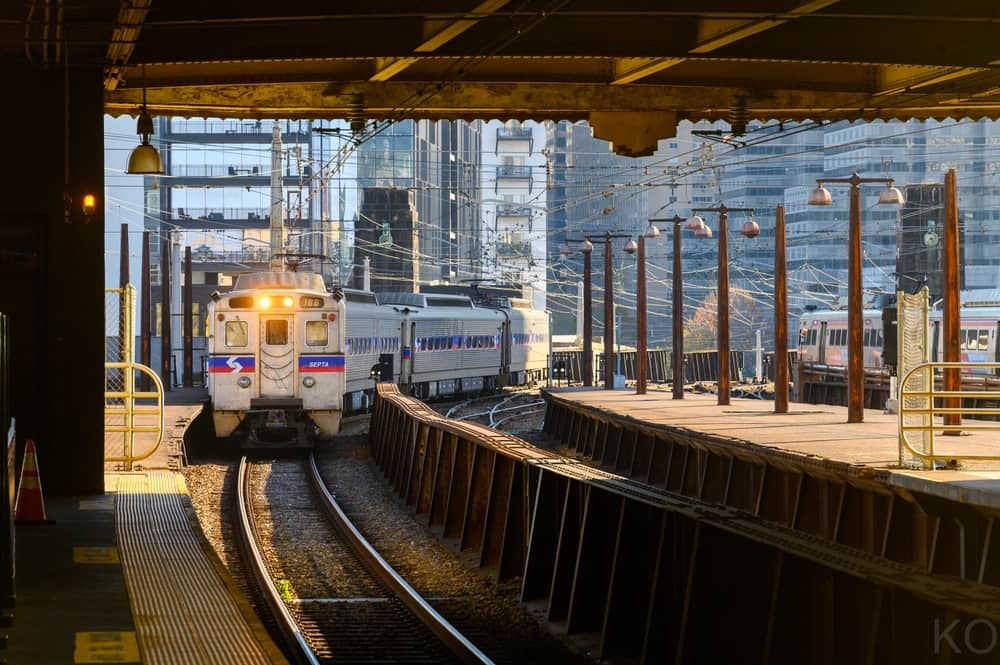
When an RTD light rail train hits your car, you can bring a claim, and the rules are different from a typical crash because RTD is a public entity. That status means the Colorado Governmental Immunity Act (CGIA) sets the rules: a short written notice deadline, a cap on what you can recover, and no punitive damages.
A driver hit by another car in Denver usually has years to file suit. A driver hit by a light rail train has 182 days to get a formal notice into RTD’s hands, or the claim can be lost for good.
If a light rail train hit your car anywhere in the Denver metro, Born & McCaffrey Injury Law can review what happened in a free consultation, in English or Spanish, and explain how these rules apply to you.
Schedule a Free Consultation
Page Topics
Can You Bring a Claim Against RTD After a Light Rail Train Hits Your Car?
Yes. Colorado law treats a Regional Transportation District (RTD) light rail car as a motor vehicle, so RTD can be held responsible for a negligent train operator. You must file a written notice of claim within 182 days, and damages are capped.
RTD Light Rail Crash Claims at a Glance
Here is what Colorado law says about a crash between your car and an RTD light rail train:
- The Colorado Governmental Immunity Act defines a light rail car owned or leased by a public entity as a motor vehicle, so RTD can be liable when its employee operates a train negligently.
- A person injured by a public entity must file a written notice of claim within 182 days after discovering the injury, and missing that deadline bars the claim.
- For claims that accrue on or after January 1, 2026, and before January 1, 2030, the most one person can recover from public entities for a single occurrence is $505,000.
- A public entity such as RTD cannot be ordered to pay punitive damages.
- Colorado’s modified comparative negligence rule bars recovery if you are 50% or more at fault and reduces your award by your share of fault if you are less than 50% at fault.
Why Is an RTD Light Rail Crash a Different Kind of Accident Claim?
The party on the other side is a government body. Colorado gives public entities immunity from most injury claims and waives it only in specific situations, with conditions attached.
RTD Is a Public Entity, So the Governmental Immunity Act Applies
RTD is covered by the governmental immunity rules because Colorado law makes it a political subdivision of the state. The CGIA’s definition of “public entity” includes every district, agency, and political subdivision organized under state law, which brings RTD and its employees within the Act.
Colorado Law Counts a Light Rail Car as a Motor Vehicle
A light rail car is a motor vehicle under the CGIA, and that single definition is what opens the door to a claim. Section 24-10-103 of the
Colorado Revised Statutes (C.R.S.) defines “motor vehicle” to include a light rail car or engine owned or leased by a public entity.
Section 24-10-106 then waives immunity for injuries resulting from the operation of a motor vehicle owned or leased by a public entity, by a public employee acting in the course of employment. When an RTD operator runs a train carelessly and hits your car, the claim fits that waiver.
Who Was Running the Train Can Change the Claim
The waiver covers public employees, and the CGIA’s definition of public employee leaves out independent contractors. RTD also runs commuter rail lines, which are a separate system from light rail, and some rail service in the region involves private contractors.
Before any notice goes out, it helps to confirm which line and which operator were involved, since that decides who the claim is against.
The table below compares an ordinary Denver car crash with a crash involving an RTD light rail train.
| Issue |
Crash with another private driver |
Crash with an RTD light rail train |
| Who the claim is against |
The other driver and their auto insurer |
RTD as a public entity, and possibly the train operator |
| Early formal step |
No statutory notice to the driver is required |
Written notice of claim within 182 days after discovering the injury |
| Waiting period before a lawsuit |
None set by statute |
No lawsuit until RTD denies the claim or 90 days pass after the notice |
| Limit on recovery |
The at-fault driver’s policy and assets set the practical limit |
$505,000 per person for claims accruing in 2026 through 2029 |
| Punitive damages |
Possible in limited circumstances |
Not available against RTD |
How Does the 182-Day Notice of Claim Work for an RTD Light Rail Accident?
Under C.R.S. 24-10-109, anyone claiming an injury by a public entity or its employee must file a written notice within 182 days after discovering the injury. Filing on time is a jurisdictional requirement, which means a court cannot hear the case if the notice is late.
The statute lists what the notice has to contain:
- The name and address of the person making the claim, and the name and address of their attorney, if any
- A concise statement of the facts, including the date, time, place, and circumstances of the crash
- The name and address of any public employee involved, if known
- A concise statement of the nature and extent of the injury or damage
- The amount of money being requested
Where the Notice Goes
For a claim against a public entity other than the state, the notice goes to the entity’s governing body or its attorney. The notice is effective when it is mailed by registered or certified mail with a return receipt requested, or when it is personally served.
RTD’s own
risk management page offers an online claim form and lists a mailing address for its General Counsel Department at 1660 Blake Street in Denver. Keep proof of when and how the notice was sent.
What Happens After RTD Receives the Notice
After a notice is filed, you cannot sue right away. The statute bars a lawsuit until RTD denies the claim or 90 days pass after the notice is filed, whichever comes first.
RTD says most of its investigations take six to eight weeks, and a claim with no response within 90 days is presumed denied.
The Lawsuit Deadline Is a Separate Clock
Filing the notice does not replace the deadline for filing a lawsuit. The CGIA says a case must be filed within the limitation period that Colorado’s limitation statutes set for that type of action, extended if the 90-day waiting period would otherwise cut it off.
Colorado sets three years for most motor vehicle injury claims and two years for many other claims against public entities, so the correct deadline depends on the facts. Our article on
filing deadlines covers the general rules, but in an RTD case the 182-day notice comes due first.

How Much Can You Recover After an RTD Light Rail Crash?
You can recover damages from RTD only up to the CGIA’s caps, which the Colorado Secretary of State adjusts every four years. The cap that applies depends on when the claim accrued, according to the
Secretary of State’s certificate.
| Claim accrued |
Cap for one person |
Cap for two or more people in one occurrence |
| January 1, 2018, through December 31, 2021 |
$387,000 |
$1,093,000 (no one person over $387,000) |
| January 1, 2022, through December 31, 2025 |
$424,000 |
$1,195,000 (no one person over $424,000) |
| January 1, 2026, through December 31, 2029 |
$505,000 |
$1,421,000 (no one person over $505,000) |
The Per-Person and Per-Occurrence Caps
The cap applies to everything recovered under the CGIA for a single occurrence, whether from one public entity or several, and from public employees too. Naming both RTD and the train operator in a lawsuit does not raise the limit.
No Punitive Damages Against RTD
RTD cannot be made to pay punitive or exemplary damages. C.R.S. 24-10-114 says a public entity is not liable, directly or by indemnification, for punitive damages or damages for outrageous conduct, apart from a narrow exception the public entity itself controls.
Shared Fault Can Reduce the Award
If you were partly at fault, Colorado reduces your damages by your percentage of fault and bars recovery entirely at 50% or more. Our breakdown of the
50% bar rule explains how fault gets assigned.
For example, if a jury valued a driver’s losses at $100,000 and found the driver 20% at fault, the award would drop to $80,000. In a light rail case, how the driver approached the crossing is likely to be a central fault question, which is why the crossing evidence matters so much.
Who Has the Right of Way When a Car Meets a Light Rail Train?
At a railroad crossing, Colorado law puts specific duties on drivers. Under C.R.S. 42-4-706, a driver approaching a railroad crossing sign must:
- Slow to a speed that is reasonable and safe for the conditions
- Stop at the marked stop line when a traffic control device, flagperson, or safety requires a stop
- Stop between 15 and 50 feet from the nearest rail when there is no stop line, or at the closest point with a clear view of approaching trains
- Never drive through, around, or under a crossing gate or barrier that is down, coming down, or going up
RTD’s
safety reminders add that trains cannot stop quickly and always have the right of way, so the facts of your crossing matter.
When the Driver Followed the Rules
A driver who obeyed the signals can still be the victim of a negligent train operator. Operator inattention, excessive speed for the conditions, a failure to respond to a vehicle already on the tracks, or an operator moving against a signal can all point fault toward RTD.
Light rail also shares streets with cars in parts of Denver, where traffic signals rather than crossing gates control the movement. In those intersections, the question looks more like an ordinary right-of-way dispute: who had the signal, and who failed to yield.
Evidence That Shows What Happened at the Crossing
The proof in a light rail crash often sits in records that RTD or others control, such as:
- Video from the train, nearby stations, traffic cameras, or businesses, if it exists
- Records of crossing signal and gate activity at the time of the crash
- Train operation data and the operator’s employment and training records
- Data from your own vehicle’s event data recorder
- Photographs of the scene, the signals, and the damage to your car
- The police report and statements from passengers and witnesses
Some records can be overwritten or lost, so an early written request to preserve them helps.
Practical Steps That Protect an RTD Light Rail Claim
A few early decisions shape how an RTD claim unfolds. Many people in this situation find these steps helpful:
- Write down the date, time, exact crossing or intersection, train line, and direction of travel while the details are fresh
- Mark the 182-day notice deadline on a calendar the day you learn you were hurt
- Keep every medical record, repair estimate, rental receipt, and pay stub tied to the crash
- Hold off on giving a recorded statement about fault until you understand the CGIA rules
- Talk with a lawyer before the notice is sent, so the notice includes every required item
RTD Light Rail Accident Claims in Denver: Questions Answered by Our Attorneys
Can I sue the RTD light rail operator personally?
Yes, in some cases. Colorado’s immunity statute does not let a public employee claim immunity for injuries from the operation of a public entity’s motor vehicle, but the 182-day notice requirement and the same damage caps still apply, and suing both RTD and the operator does not increase the total.
What if my family member died in a crash with an RTD train?
A wrongful death claim against RTD also requires a CGIA notice of claim, and the statute allows the personal representative, surviving spouse, or next of kin to present it. Colorado’s general deadline for filing a wrongful death lawsuit is two years.
Does the notice of claim cover damage to my car?
Yes. The CGIA defines “injury” to include damage to or loss of property, so a claim against RTD for vehicle damage needs a timely notice of claim just like an injury claim, even when no one was hurt.
Does the 182-day deadline start on the day of the crash?
The CGIA notice clock starts on the date you discover the injury, regardless of whether you knew every element of a legal claim at that time. For most crashes, that is the day of the collision, so counting from the crash date is the safer approach.
Can I file a claim with RTD myself without a lawyer?
Yes. RTD accepts notices of claim through an online form, by registered or certified mail, or by delivery to its General Counsel Department, but the notice still has to contain every item the statute requires.
Talking It Through With Born & McCaffrey Injury Law
A crash with a light rail train comes with its own rulebook, and the first deadline arrives faster than most people expect. Starting early gives you room to get the notice right.
Born & McCaffrey Injury Law is based in Denver, answers calls 24 hours a day, and offers free consultations. Attorney Peter McCaffrey is fluent in Spanish, so you can talk through your case in the language you are most comfortable with.
Call
(303) 800-6996 or
reach our team online to talk about your RTD claim. If you are still deciding whether you need help, our
car accident lawyers can explain how your claim compares to an ordinary Denver crash.
Request Your Free Consultation